
When industrial buyers invest in a high-efficiency rotary screw air compressor, they focus rightly on energy performance, pressure output, and reliability. But there is a second layer of the compressed air system that determines whether that investment protects or quietly destroys downstream equipment, product quality, and production continuity: the after-treatment system. In 2026, compressed air treatment is no longer optional infrastructure. It is the difference between ISO-compliant air and an invisible liability.
The Problem Hidden Inside Every Compressed Air System
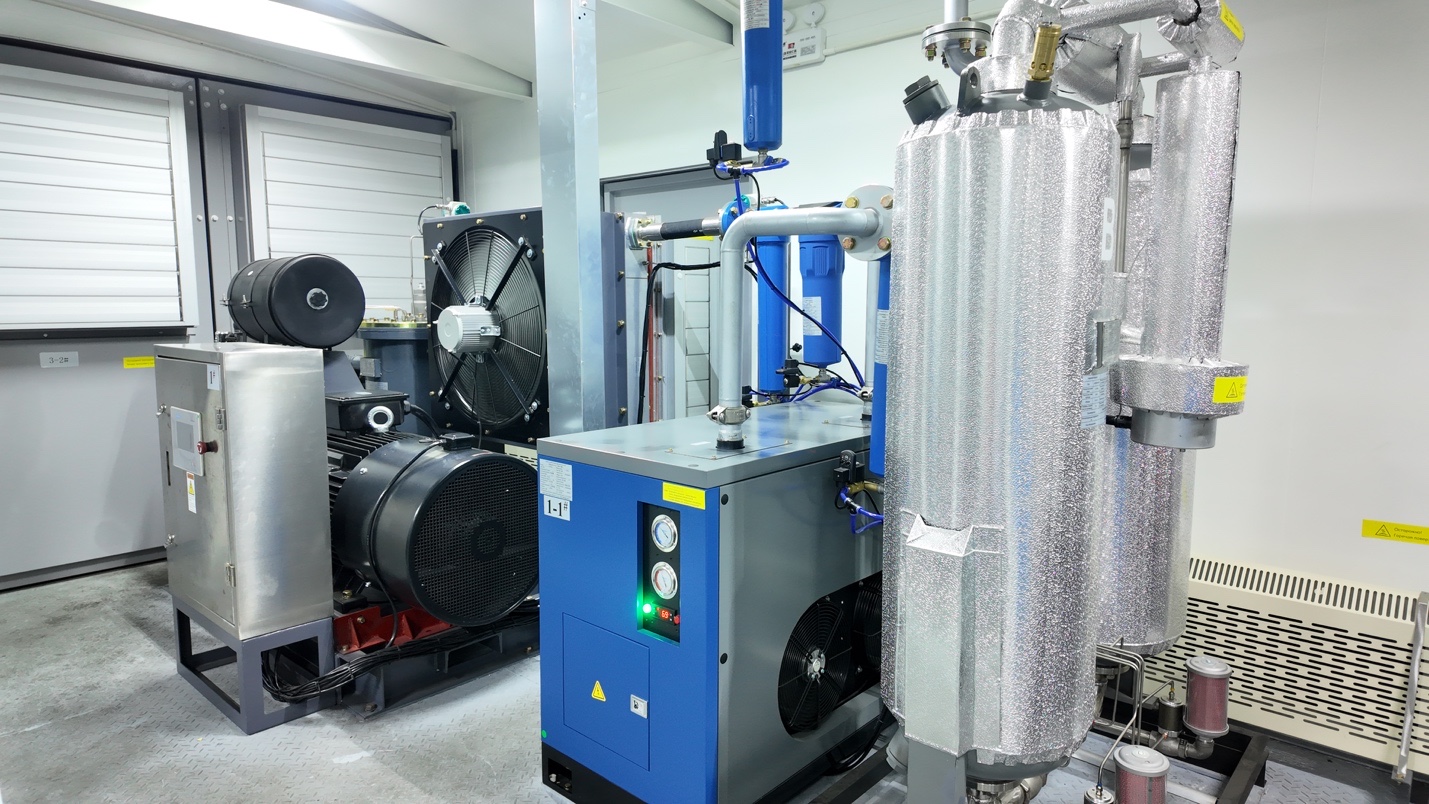
When atmospheric air enters a screw compressor, it brings with it water vapor, dust particles, hydrocarbon vapors, and microorganisms. Compression raises the temperature and dramatically concentrates all of these contaminants. As compressed air cools through distribution pipework, water vapor condenses — pooling in tanks, corroding pipes, triggering pneumatic valve failures, and contaminating end products.
Studies across industrial sectors find that untreated compressed air moisture and contamination account for an estimated 25–40% of unplanned pneumatic equipment failures. In food processing and pharmaceutical environments, a single contaminated air event can trigger product recalls that dwarf the cost of an entire treatment system many times over.
Five Categories of Contamination in Untreated Compressed Air
| Contaminant | Effect | Treatment | Critical Sectors |
|---|---|---|---|
| Water Vapor | Corrosion, rust, valve failure | Refrigerated or desiccant dryer | All industries |
| Oil Aerosol | Product contamination, instrument fouling | Coalescing filter 0.01 µm | Food, pharma, electronics |
| Solid Particles | Pneumatic wear, valve damage | Particulate filter 1 µm | All industrial systems |
| Oil Vapor (VOC) | Odor, taste contamination | Activated carbon filter | Food, beverage, medical |
| Condensate | Oil-water mix, environmental hazard | Oil-water separator | All oil-injected systems |
The ISO 8573-1 Standard: Understanding Air Quality Classes
The international standard ISO 8573-1 defines compressed air quality across three dimensions: solid particle size and concentration, water content (pressure dew point), and oil content. Understanding where your application falls in this classification is the starting point for designing an appropriate treatment system.
| ISO Class | Max Particle Size | Pressure Dew Point | Max Oil Content | Typical Application |
|---|---|---|---|---|
| Class 0 | As specified | As specified | < 0.01 mg/m³ | Pharma, food contact, breathing air |
| Class 1 | 0.1 µm | −70°C PDP | 0.01 mg/m³ | Semiconductor, medical devices |
| Class 2 | 1 µm | −40°C PDP | 0.1 mg/m³ | Electronics, precision instruments |
| Class 3 | 5 µm | −20°C PDP | 1 mg/m³ | Spray painting, pneumatic tools |
| Class 4 | 15 µm | +3°C PDP | 5 mg/m³ | General manufacturing, workshops |
| Class 5–6 | 40 µm | +7°C PDP | 25 mg/m³ | Non-critical utility air |
Core After-Treatment Equipment: What Each Component Does
1. Refrigerated Air Dryer
Cools compressed air to 2–10°C, causing water vapor to condense and drain. Achieves a pressure dew point (PDP) of +3°C — adequate for most general industrial applications (ISO Class 4). No consumable desiccant media; low energy and maintenance cost. Best choice for continuous operation in temperate environments.
2. Desiccant (Adsorption) Air Dryer
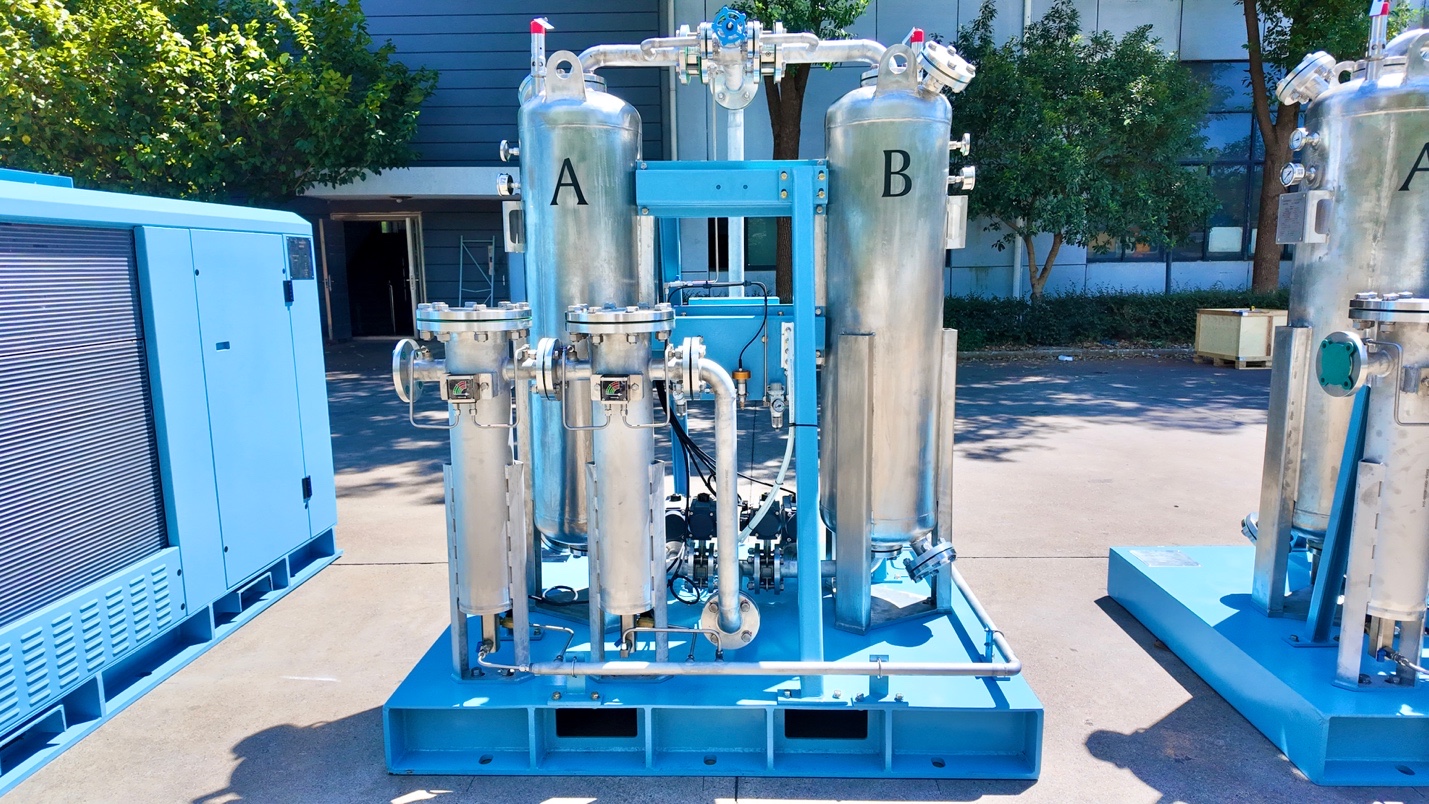
Uses twin towers of activated alumina or molecular sieve to adsorb water vapor, achieving pressure dew points of −40°C to −70°C (ISO Classes 1–2). Essential wherever pipe freezing is a risk (outdoor lines, cold storage) or where instrument air demands ultra-low moisture. Alternating tower regeneration provides continuous output.
3. Coalescing Filter (Oil Removal)
High-efficiency elements capture submicron oil aerosols and fine particulates. Typical installation: 1-micron pre-filter (bulk water + particles) → 0.01-micron coalescing filter (fine oil mist → residual below 0.01 mg/m³). Essential for any oil-injected compressor feeding quality-critical processes.
4. Activated Carbon (VOC/Odor) Filter
Adsorbs oil vapor and volatile organic compounds that pass through mechanical filters. Required to reach ISO Class 1 oil limits and for applications with direct product contact: food packaging, beverage carbonation, pharmaceutical blister packaging, cosmetics.
5. Oil-Water Separator
Treats condensate from dryers, filters, and drain traps. Separates oil (typically 50–500 ppm) from water. Modern gravity-coalescing designs achieve
6. Air Receiver Tank
Provides buffer storage for compressed air, dampening demand fluctuations and reducing compressor cycling frequency. Correctly sized receivers reduce VFD compressor run hours by 15–20%, extending service life. Pressure vessels certified to PED/GB/ASME standards depending on market.
Designing a Complete Treatment System: Industry-by-Industry
Food & Beverage Processing
Compressed air in food manufacturing is treated as a process ingredient when it contacts food or packaging. ISO 8573-1 Class 1 is the recommended baseline, achieved through a complete treatment train: refrigerated dryer → 1µm pre-filter → 0.01µm coalescing filter → activated carbon filter. HACCP compliance documentation should include compressed air quality validation records.
Pharmaceutical & Medical Device Manufacturing
GMP guidelines require compressed air to be validated for purity. ISO 8573-1 Class 1 or Class 0 is standard. A desiccant dryer (−40°C PDP minimum) with sterile filtration, periodic air quality monitoring, and third-party testing are required for GMP compliance.
Automotive & Metal Fabrication
Paint shop air requires ISO Class 2–3 for oil and particulates — any contamination causes paint adhesion failure and surface defects. Refrigerated dryer with coalescing filtration is typically sufficient; desiccant drying is specified for body-in-white lines with subfreezing pipe runs.
Electronics & Semiconductor
The most demanding application for compressed air treatment. ISO Class 1 across all three contamination categories, ultra-clean stainless distribution, and point-of-use filtration at each tool are standard. Oil-free screw compressors combined with desiccant drying are the baseline specification.
Frequently Asked Questions — Compressed Air Treatment Equipment
Q: Do I need an air dryer with my screw compressor?
A: In virtually all industrial applications, yes. Compressed air is saturated with water vapor. Without drying, liquid water enters pipework, accumulates in receivers, and reaches pneumatic tools, cylinders, and instruments — causing corrosion, valve failure, and product contamination. A refrigerated air dryer is the minimum standard for any permanent compressed air system.
Q: What is the difference between a refrigerated air dryer and a desiccant air dryer?
A: A refrigerated dryer cools incoming air to approximately 3°C, causing water to condense and drain — achieving a pressure dew point (PDP) of +3°C. Energy consumption is low with no consumable media. A desiccant dryer uses hygroscopic media to adsorb water vapor, achieving PDP as low as −70°C. Specified where freezing protection is required or where process requirements demand ultra-dry air (ISO Class 1–2). Desiccant dryers consume more energy and require periodic media replacement.
Q: What is a coalescing filter and do I need one?
A: A coalescing filter captures oil aerosol droplets too small for standard mechanical separation. A 0.01-micron coalescing filter brings oil content below 0.01 mg/m³ — meeting ISO 8573-1 Class 1 oil purity. If your application involves food product contact, pharmaceutical production, precision instruments, painting, or electronics assembly, a coalescing filter is not optional — it is the safeguard that prevents costly contamination incidents.
Q: How do I size an air dryer for my compressor?
A: Dryer sizing must account for: (1) Maximum compressed air flow at working pressure. (2) Inlet air temperature — hotter air entering the dryer means higher moisture load. (3) Ambient temperature — significantly affects refrigerated dryer performance. (4) Working pressure — higher pressure means less volume and easier drying. If your compressor operates in an environment above 25°C or if inlet temperature after the aftercooler exceeds 40°C, upsize your dryer by one capacity grade. SUCCESS ENGINE provides matched dryer and compressor packages, eliminating sizing errors at the design stage.
Q: What is an oil-water separator and is it legally required?
A: An oil-water separator treats condensate — a mixture of water and compressor oil — that accumulates in dryers, filters, and automatic drains. This condensate typically contains 50–500 ppm of oil, far above legal discharge limits in most jurisdictions (EU limits: typically 5–20 ppm). Discharging untreated condensate to floor drains, stormwater, or municipal sewers is an environmental violation in most markets. An oil-water separator is a legal requirement for any oil-injected compressed air system.
Q: Can I buy the compressor and all air treatment equipment from one supplier?
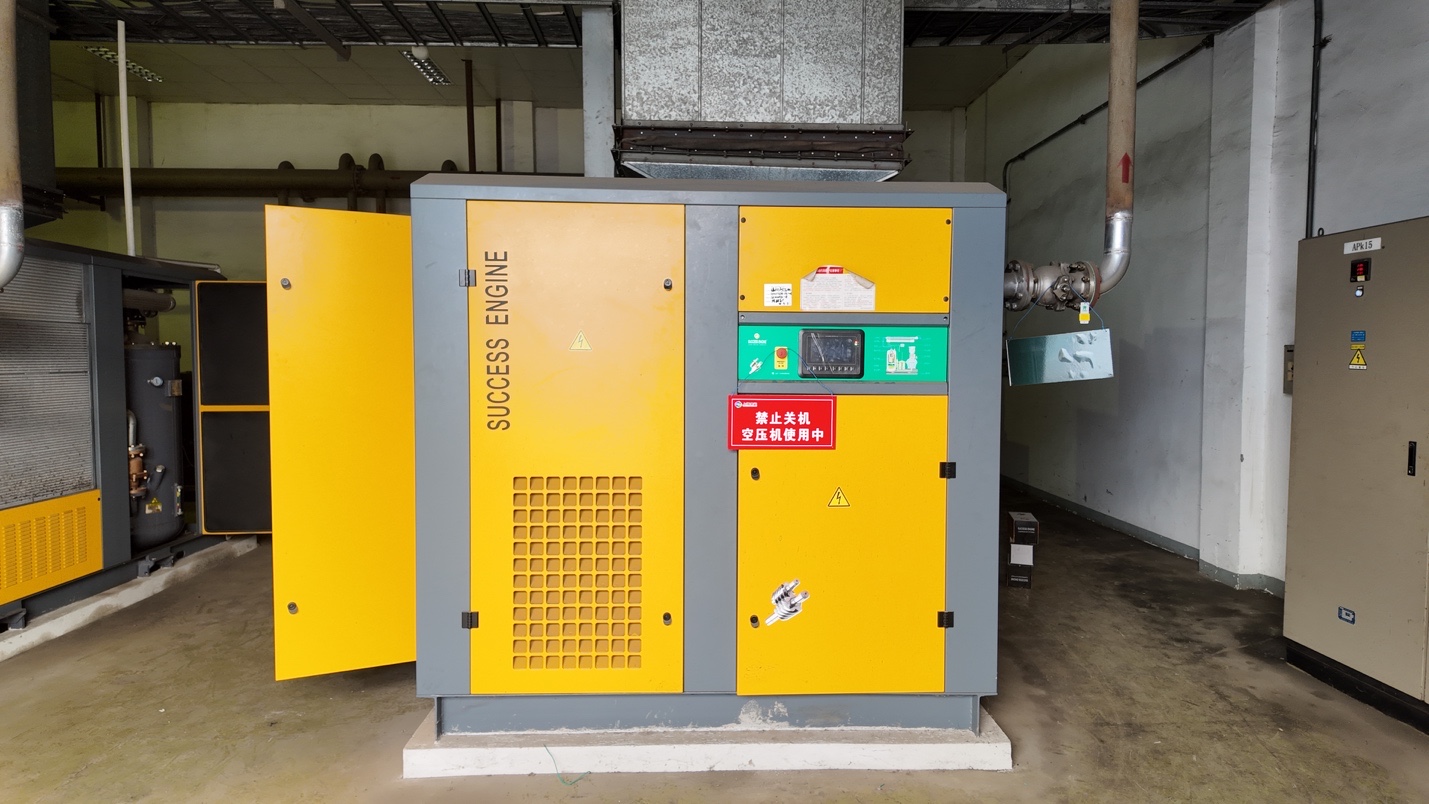
A: Yes — and for most industrial installations, it is the better approach. Integrated packages combine the compressor, refrigerated dryer, pre-filter, and compressed air receiver in a single skid-mounted unit. This eliminates inter-component piping design errors, ensures matched sizing, simplifies installation, and provides single-source accountability. SUCCESS ENGINE offers complete packaged compressed air stations including our four-in-one integrated series available in configurations from 11 kW to 250 kW.
Q: How do I verify that my compressed air meets ISO 8573 quality standards?
A: Verification requires measurement: Pressure dew point — use a dedicated dew point sensor (inline or portable). Oil content — ISO 8573-2 / ISO 8573-5 test methods via laboratory analysis or calibrated inline sensors. Particle counts — particle counters per ISO 8573-4. For pharmaceutical GMP and food safety HACCP compliance, periodic third-party testing by an accredited laboratory is typically required. Carry out a commissioning verification test before connecting any new system to production processes.
SUCCESS ENGINE Air Treatment Equipment: Built for Global Industrial Standards
Since 2004, SUCCESS ENGINE has supplied air treatment equipment alongside screw compressor systems to industrial clients across Europe, the Middle East, South Asia, and Southeast Asia. Our product range includes:
- • Refrigerated dryers achieving +3°C PDP, designed for ambient temperatures up to 50°C — matching field conditions in the Middle East and South Asia
- • Desiccant dryers achieving −40°C PDP standard (−70°C available), with heatless, heated, and blower-purge regeneration options
- • Coalescing filter packages: 1µm → 0.01µm two-stage standard, with ISO 8573-1 Class 1 certification available
- • Oil-water separators compliant with EU 2455/2001/EC and equivalent international environmental standards
- • Air receiver tanks manufactured to GB 150 / PED 2014/68/EU / ASME standards depending on destination market
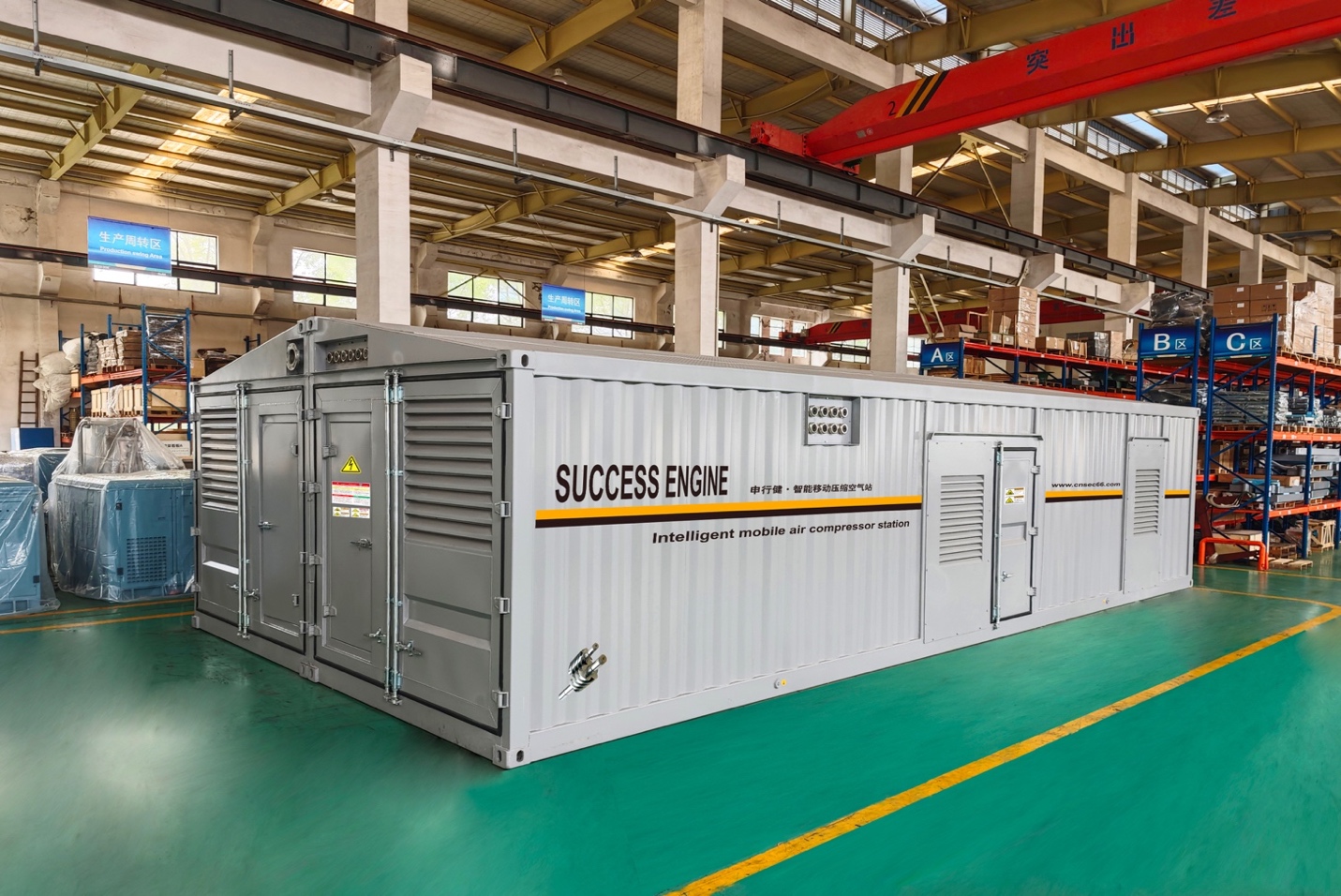
- • Four-in-one integrated packages: compressor + dryer + filter + receiver in single skid configuration
Post time: Jun-29-2026