
Central Asia is entering a decisive decade for energy infrastructure. Kazakhstan is expanding upstream capacity at Tengiz, Kashagan, and Karachaganak. Turkmenistan is advancing gas export corridors toward China and South Asia. Uzbekistan is modernizing processing plants and gas-to-liquids facilities. Across these programs, one utility is easy to overlook and impossible to operate without: reliable compressed air from industrial rotary screw compressors.
For SUCCESS ENGINE, a screw air compressor is not a commodity accessory. It is process-critical equipment for wellsite utilities, pipeline construction, instrument air, nitrogen generation, and plant maintenance. This briefing examines development prospects in the Central Asian oil and gas market, and how operators should specify machines for climate, safety, and logistics.
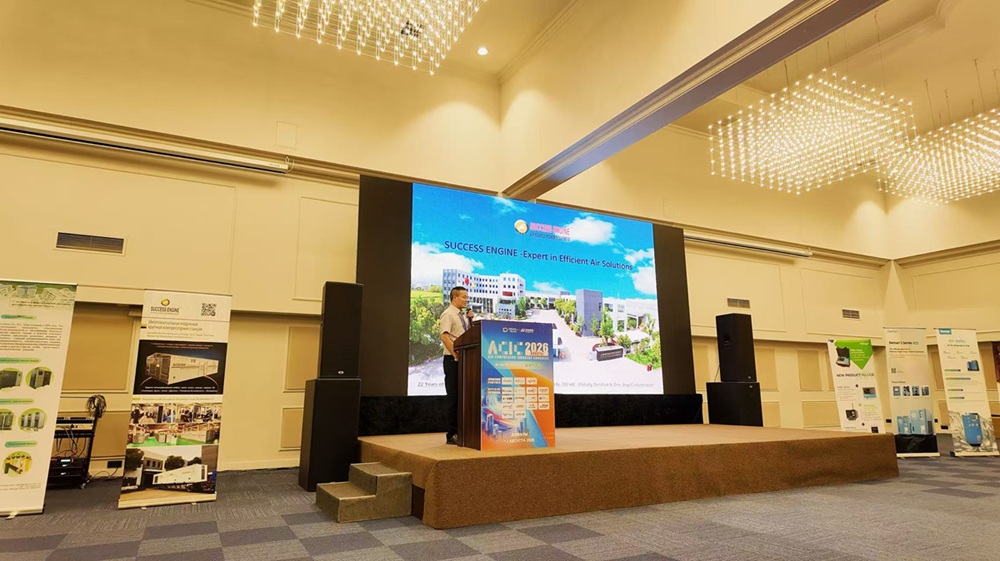
Why compressed air sits at the center of Caspian energy projects
Oil and gas facilities consume compressed air in two layers. Plant air drives pneumatic tools, actuators, cleaning, and construction. Instrument air feeds control valves, analyzers, and safety systems that cannot tolerate oil contamination. Rotary screw air compressors dominate both layers because they deliver continuous duty, stable pressure, and a lower lifecycle cost than reciprocating machines at the flow rates typical of processing plants.
In Central Asia those duties are amplified by distance and climate. Many assets sit hundreds of kilometers from major cities. Winter temperatures on the Kazakh steppe regularly fall below minus thirty degrees Celsius. Summer dust storms load intake filters. Grid power can be unstable at remote well pads. A factory-duty compressor will not necessarily survive a Kashagan module, a Galkynysh gathering station, or a spread on the Central Asia–China Gas Pipeline.
A factory-duty compressor will not necessarily survive a Kashagan module, a Galkynysh gathering station, or a spread on the Central Asia–China Gas Pipeline.
Five forces lifting screw compressor demand through 2030;
Five structural forces are lifting demand for screw air compressors across the region through 2030.
Upstream brownfield expansion in Kazakhstan still depends on enhanced-oil-recovery and processing upgrades. Each new train needs instrument air, nitrogen, and maintenance air. Oil-injected rotary screw compressors with heat recovery and variable-speed drives are the default choice for these continuous loads.
Gas midstream and export come next. Turkmenistan holds among the world’s largest proven gas reserves, with Galkynysh as the flagship field. New treatment and pipeline capacity toward China or along the TAPI corridor creates multi-year demand for stationary plant compressors and portable screw machines used in construction.
Gas processing in Uzbekistan is the third driver. Modernization of national gas assets, sulfur recovery, and gas-to-liquids projects raise the specification for oil-free instrument air and Class 0 air. Oil-free rotary screw designs are displacing older oil-lubricated packages that no longer meet purity targets.
Localization and aftermarket follow. Operators in Kazakhstan and Uzbekistan now require local spare-parts stock, trained technicians, and documented service intervals. Total cost of ownership outweighs purchase price in most tenders, favoring manufacturers who can support machines for ten to fifteen years.
Safety and energy regulation close the list. Explosion-proof motors, ATEX or IECEx certification, and high-efficiency classes are moving from preferred to mandatory. Screw compressors with IE3 or IE4 motors and variable-speed drives cut energy use—often ten to fifteen percent of plant electricity—and reduce risk in classified areas.
Portable diesel screw compressors form a parallel market. Engineering contractors building gathering lines, well pads, and compressor stations need high-flow air that can move with the spread. That fleet demand spikes during construction seasons and remains after handover as a maintenance backup. SUCCESS ENGINE treats portable and stationary screw air compressors as one specification problem: the same air quality and cold-start logic, different packaging.

What the operating environment actually requires
Climate envelope.
Intake heaters, low-temperature lubricants, oil-sump heating, and freeze-protected drains decide whether a machine starts in January. High-ambient coolers, oversized aftercoolers, and dust-rated filtration protect the same package through July.
Hazardous-area classification.
Well pads, compressor stations, and tank farms require certified motors, certified controls, and documented gas-group ratings. A general-industry screw compressor cannot be adapted on site without voiding certification.
Air quality.
Instrument air should meet ISO 8573-1 purity classes for the loop—typically oil-free, dry, and particulate-controlled. Nitrogen generators for blanketing and pipeline purging inherit those requirements. Oil-injected machines remain excellent for plant air when filtration and dryers are correctly sized.
Serviceability.
Remote sites need long service intervals, common filter SKUs, and clear diagnostics. Containerized, skid-mounted screw compressor packages with integrated dryers and weather enclosures shorten installation and survive winter transport.
Power quality is a further constraint. Remote well pads may run on generators with voltage dip and frequency drift. Variable-speed screw compressors with robust electrical protection ride through those conditions more cleanly than fixed-speed machines sized only for a factory bus.

SUCCESS ENGINE’s position in the Central Asian market
SUCCESS ENGINE designs rotary screw air compressors for continuous industrial duty, with a growing focus on oil and gas utilities in Central Asia: oil-injected machines for plant air and pipeline spreads; oil-free screw compressors for instrument air; variable-speed packages for fluctuating wellsite loads; extreme-climate enclosures; explosion-proof configurations; and spare-parts planning for Kazakhstan, Uzbekistan, and neighboring markets.
The opportunity is not one megaproject. It is a decade of overlapping work: brownfield air-system replacements, new compressor houses, portable fleets for contractors, and oil-free upgrades driven by instrument reliability. Treating compressed air as a specified utility reduces shutdowns and energy waste.
A practical specification checklist
Procurement teams should ask four questions early. Can the package start at minus thirty degrees Celsius without field modification? Is the electrical system certified for the plot-plan area classification? Does air treatment deliver the ISO 8573-1 class required by instrument air and nitrogen generation? Is there a parts and service plan inside the country of operation? Those questions separate a catalog machine from a field machine.
Closing view
Central Asia’s oil and gas map is being redrawn by pipelines, field expansions, and processing upgrades. Screw air compressors will not make headlines. They will determine whether those assets start, stay on specification, and remain efficient. SUCCESS ENGINE’s view: the winners will be machines engineered for cold starts, classified areas, documented air purity, and service that can reach the steppe.
Screw air compressors in Central Asia: questions operators ask
What is a screw air compressor used for in oil and gas?
A rotary screw air compressor supplies continuous compressed air for plant utilities, pneumatic tools, control valves, and process support. On oil and gas sites it feeds instrument air, nitrogen generators, pipeline construction spreads, and wellsite services. Screw machines are preferred over reciprocating units for 24-hour duty, stable pressure, and lower lifecycle cost at process-plant flow rates.
Why is Central Asia a growth market for rotary screw compressors?
Kazakhstan is expanding brownfield oil production, Turkmenistan is adding gas treatment and export capacity, and Uzbekistan is modernizing gas processing. Each program needs new or replacement compressed-air systems. Extreme climate, long logistics chains, and stricter purity and explosion-proof rules further increase demand for purpose-built screw air compressor packages rather than generic factory machines.
What is the difference between oil-injected and oil-free screw compressors?
Oil-injected rotary screw compressors use lubricant in the compression chamber and suit plant air, construction, and most utility loads when paired with proper filtration and dryers. Oil-free screw compressors keep lubricant out of the air path and are specified for instrument air, analyzer systems, and nitrogen generation where ISO 8573-1 oil-free or Class 0 purity is required. Many Central Asian plants need both.
Which Central Asian countries are driving demand for industrial air compressors?
Kazakhstan, Turkmenistan, and Uzbekistan account for the bulk of oil and gas compressed-air demand. Kazakhstan leads in upstream oil. Turkmenistan leads in gas reserves and export pipelines, including routes toward China and the proposed TAPI corridor. Uzbekistan is a fast-growing buyer of oil-free instrument air for processing and gas-to-liquids. Kyrgyzstan and Tajikistan add smaller industrial loads.
How do extreme temperatures in Kazakhstan affect screw compressor selection?
Steppe winters often drop below minus thirty degrees Celsius, so packages need intake heaters, low-temperature lubricants, oil-sump heating, and freeze-protected condensate drains. Summers bring high ambient temperatures and dust, which require oversized coolers and heavy-duty filtration. SUCCESS ENGINE treats this climate envelope as a design input, not an aftermarket kit.
What certifications should an explosion-proof air compressor have for oil and gas sites?
Tenders from international operators typically require ATEX or IECEx certified motors and controls matched to the site gas group and temperature class, plus documented hazardous-area drawings. General-industry machines cannot be converted in the field without voiding certification. Ask for the certificate, the exact marking, and the enclosure rating before award.
What ISO 8573-1 air purity class is required for instrument air?
Instrument air is commonly specified as dry, oil-free, and particulate-controlled under ISO 8573-1, with the exact class set by the control-system vendor and the nitrogen generator if one is downstream. A nameplate flow rate is not a purity guarantee. The air treatment train—dryers, filters, and, where required, an oil-free compressor—must be sized to the class, not only to cubic meters per minute.
How does SUCCESS ENGINE support screw compressor projects in Central Asia?
SUCCESS ENGINE supplies oil-injected and oil-free rotary screw air compressors in extreme-climate and explosion-proof configurations, including variable-speed and containerized packages. Support is built around application engineering, spare-parts planning, and technician training for Kazakhstan, Uzbekistan, and neighboring oil and gas markets, so total cost of ownership is visible at tender, not after commissioning.
Specify a screw air compressor for a Central Asian oil or gas site
Tell SUCCESS ENGINE the country, area classification, and whether you need plant air, instrument air, or a portable spread. An application engineer will return a package outline — climate envelope, air treatment, and service plan included.
Post time: Sep-01-2026